Nasal Breathing in Cold Weather — Why Winter Air Challenges Respiratory Function and How to Maintain Nasal Patency

Why Cold Weather Affects Nasal Function
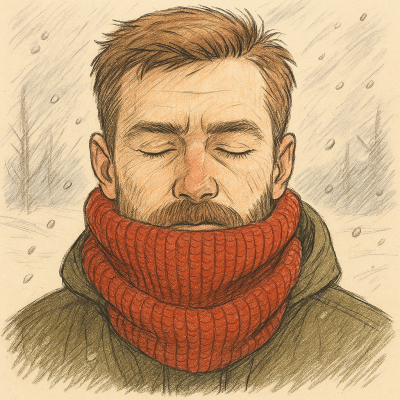
Nasal breathing becomes more difficult in winter. Cold, dry air triggers physiological responses that increase nasal congestion, reduce mucociliary clearance, and create the sensation of nasal obstruction even when no structural blockage exists. This leads many people to shift unconsciously from nasal to mouth breathing, which further compromises respiratory function.
This is not just discomfort. It is a predictable consequence of how the nasal mucosa responds to environmental conditions. Understanding the mechanisms allows you to maintain nasal breathing even when cold weather makes it more difficult.
Cold Air Reactivity: Nasal Turbinate Swelling
The nasal turbinates are bony structures covered in mucous membrane that warm and humidify incoming air. When cold air enters the nose, the turbinates respond by increasing blood flow to warm the air before it reaches the lungs. This increased blood flow causes the turbinates to swell, which narrows the nasal passages and creates the sensation of congestion.
This is a normal protective mechanism — the nose is doing its job. But the swelling can be significant enough that nasal breathing feels restricted or impossible, which drives people to switch to mouth breathing for relief.
The problem is that mouth breathing, covered in detail in the mouth breathing correction post, bypasses the warming and humidifying functions of the nose. Cold, dry air reaches the lower airways directly, which irritates the bronchial mucosa, increases inflammation, and reduces immune defenses.
Dry Air and Mucociliary Clearance
Winter air is dry. Heating systems indoors further reduce humidity. This affects mucociliary clearance — the mechanism by which the nasal passages transport mucus and trapped particles out of the respiratory tract.
Mucus production is essential for trapping pathogens, allergens, and particulate matter. Cilia (tiny hair-like structures on the epithelial cells lining the nasal passages) beat rhythmically to move mucus toward the throat where it is swallowed or expelled. This continuous clearance is the first line of defense against respiratory infections.
When the air is dry, mucus becomes thicker and more viscous. The cilia cannot move it effectively. Clearance slows. Pathogens remain in contact with the mucosa longer, which increases infection risk. The sensation of nasal blockage increases even though the actual obstruction is just thick mucus, not structural swelling.
Nitric Oxide Production and Immune Function
The nasal passages produce nitric oxide (NO), a molecule with antimicrobial properties. NO is continuously produced in the paranasal sinuses and inhaled with each nasal breath. It dilates blood vessels (improving oxygen delivery), relaxes airway smooth muscle (reducing bronchial constriction), and has direct antiviral and antibacterial effects.
Mouth breathing bypasses nitric oxide production entirely. This is particularly relevant in winter when exposure to respiratory viruses increases. Nasal breathing delivers NO to the respiratory tract with every breath, which reduces viral replication and bacterial colonization. Mouth breathing removes this protective mechanism.
The effect is measurable. Studies show that people who breathe nasally have lower rates of upper respiratory infections compared to chronic mouth breathers, even when exposure to pathogens is similar.
How to Maintain Nasal Patency in Cold Weather
The goal is not to override the body's response to cold air but to support nasal function so that breathing remains possible through the nose despite turbinate swelling and reduced humidity.
Humidification
Increase environmental humidity, especially indoors where heating systems create very dry air. Use a humidifier in sleeping and working spaces to maintain 40-50% relative humidity. This reduces mucus thickening and supports mucociliary clearance.
If a humidifier is not available, placing a bowl of water near heat sources or hanging damp towels indoors provides some benefit, though less reliably than mechanical humidification.
Saline Irrigation
Nasal saline rinses or sprays rehydrate the nasal mucosa and thin mucus, which improves clearance. Use isotonic saline (0.9% sodium chloride) 1-2 times daily, particularly before bed and upon waking.
Neti pots or squeeze bottles work for irrigation. Saline sprays are less effective but easier for people who find irrigation uncomfortable. The key is consistency — daily use maintains mucosal hydration better than intermittent use when congestion is already severe.
Breath Hold Technique for Acute Congestion
When nasal congestion is acute and preventing nasal breathing, the following technique rapidly reduces turbinate swelling by increasing CO2 levels, which triggers vasoconstriction in the nasal mucosa:
- Sit comfortably and take a normal breath through the nose (or mouth if the nose is completely blocked)
- Exhale normally and hold your breath (pinch the nose closed if needed)
- Walk slowly or gently sway while holding the breath
- Hold until you feel a strong air hunger (the urge to breathe, not panic)
- Release and resume nasal breathing (slowly and gently, not gasping)
- Repeat 3-4 times if needed
This works within minutes for most people. The mechanism is CO2 accumulation during the breath hold, which causes the blood vessels in the nasal turbinates to constrict, reducing swelling and opening the nasal passages. This is a temporary effect, but it allows you to re-establish nasal breathing, which then maintains patency through normal respiratory function.
This technique is central to Buteyko breathing, covered in the Buteyko mechanism post.
Cold Air Adaptation
Gradual exposure to cold air during nasal breathing trains the nasal mucosa to respond less reactively. This is not about forcing nasal breathing in extreme cold, but about maintaining nasal breathing during moderate cold exposure (walking outdoors, commuting) rather than immediately switching to mouth breathing.
Over weeks, the turbinates adapt. The degree of swelling in response to cold air decreases. Nasal breathing becomes easier even in cold conditions. This adaptation requires consistent nasal breathing — intermittent nasal breathing with frequent switching to mouth breathing does not produce adaptation.
Mouth Taping During Sleep
Nighttime mouth breathing is common in winter because lying supine increases nasal congestion (gravity affects blood pooling in the turbinates) and dry heated air further reduces mucosal function. Mouth taping prevents unconscious mouth breathing during sleep, which maintains nasal humidity and supports overnight mucociliary clearance.
Use hypoallergenic tape applied vertically over closed lips. This should only be done if nasal breathing is functional during waking hours. If the nose is completely blocked, address daytime nasal patency first before attempting nighttime mouth taping.
When Structural Issues Are Present
Some people have structural nasal obstruction — deviated septum, nasal polyps, enlarged turbinates — that makes nasal breathing difficult or impossible regardless of season. Cold weather exacerbates these issues because it adds reactive swelling on top of existing anatomical obstruction.
If the techniques above do not improve nasal breathing within 2-3 weeks of consistent practice, medical evaluation is appropriate. Structural issues may require surgical correction before breathwork interventions can be effective. But in most cases, seasonal nasal congestion is functional, not structural, and responds to the interventions described above.
Why This Matters for Respiratory Health
Winter is when respiratory infections peak. Cold air, dry indoor heating, and increased viral transmission create conditions where respiratory defenses are tested. Maintaining nasal breathing throughout winter is not about comfort — it is about preserving the protective mechanisms that reduce infection risk.
Nasal breathing warms and humidifies air, filters pathogens, delivers nitric oxide, and maintains proper CO2 levels. Mouth breathing removes all of these protections. The difference in infection rates between nasal and mouth breathers is measurable and clinically significant.
For people managing chronic respiratory conditions (asthma, COPD, chronic sinusitis) or autoimmune conditions where respiratory infections trigger flares, maintaining nasal breathing during winter can be the difference between a stable season and repeated illness.
When Individual Guidance Helps
For people who have chronically relied on mouth breathing and find nasal breathing difficult even in warm weather, establishing consistent nasal breathing requires systematic retraining. The assessment identifies breathing pattern dysfunction and structural factors affecting nasal patency. And in individual sessions, I guide the correction process with techniques tailored to your specific obstruction patterns and symptoms.
Nasal breathing in cold weather is not optional if you want to maintain respiratory health. It requires attention and sometimes intervention, but the protective benefits are substantial. Cold air is a challenge, not an excuse.
Next step
Want to work through your situation personally?
Disclaimer: personal experience & self-regulation practices. Not medical advice.