Blog
Practical articles on breathwork, the nervous system, chronic conditions, and self-regulation.
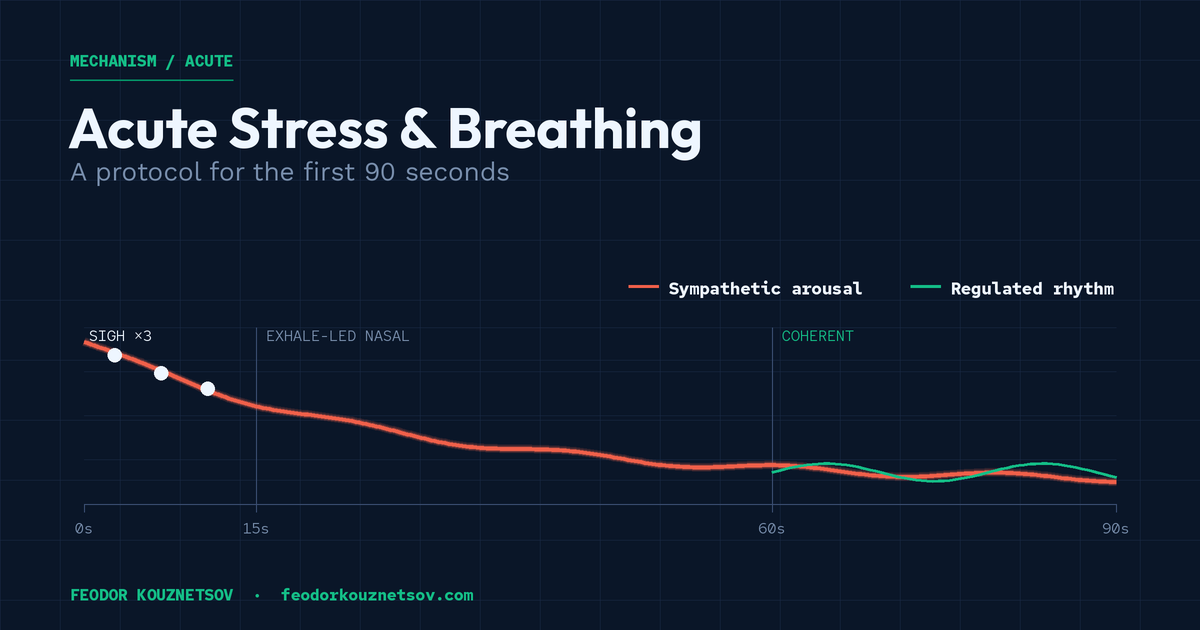
Acute Stress and Breathing — A Protocol for the First 90 Seconds
Most breathwork addresses chronic stress — daily practice that slowly retrains the nervous system. Acute stress is a different problem: a sudden sympathetic surge that peaks within seconds. This is what to do in the first 90 seconds, and the mechanism behind why it works — the physiological sigh, the baroreflex, and CO2.
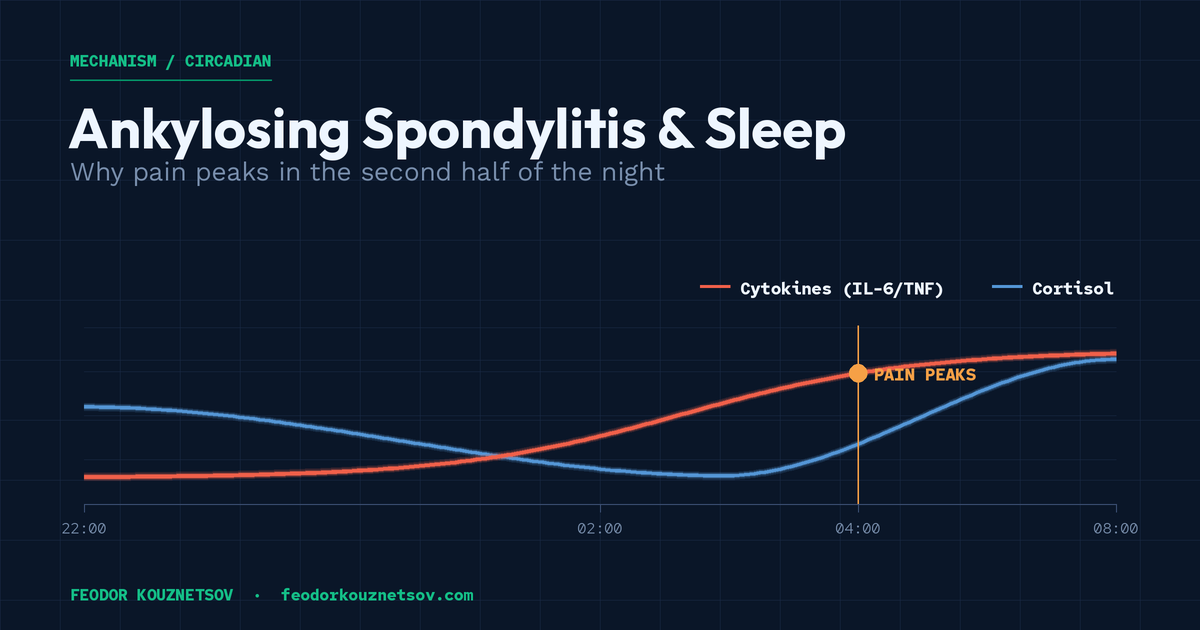
Ankylosing Spondylitis and Sleep — Night Pain, Morning Stiffness, and the Nocturnal Autonomic Shift
In ankylosing spondylitis, pain and stiffness peak in the second half of the night and the first hour after waking. This is not random. It follows the circadian rhythm of inflammatory cytokines, the pre-dawn cortisol trough, and the way breathing mechanics change the moment you lie down. Here is the mechanism, and a nasal-breathing and positioning protocol for the night.
Ankylosing Spondylitis and Chronic Holding Patterns — How Nervous System Dysregulation, Emotional Suppression, and Somatic Tension Maintain Inflammation
Living with ankylosing spondylitis for 14 years revealed patterns beyond inflammation: chronic nervous system activation, somatic holding in pelvis and diaphragm, and how suppressed emotional states manifest as physical rigidity. Here is what I observed about the psychosomatic dimension of AS.
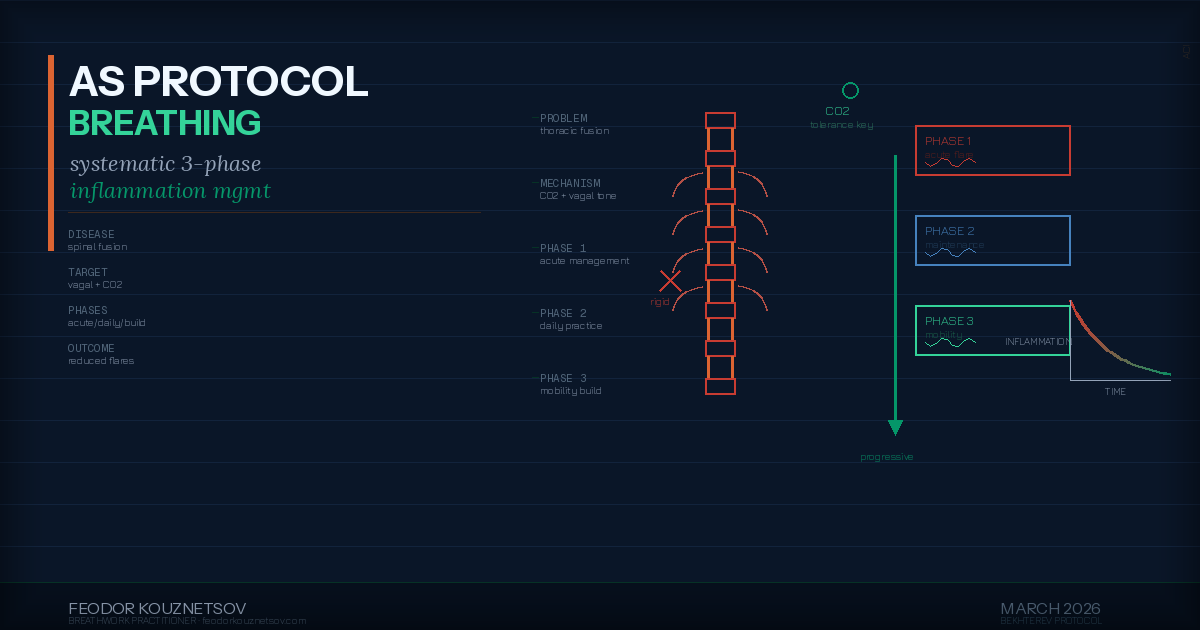
Ankylosing Spondylitis Breathing Protocol — Systematic Approach to Managing Inflammation, Mobility, and Pain Through Respiratory Function
Ankylosing spondylitis creates specific respiratory challenges through rib cage fusion, thoracic rigidity, and chronic inflammation. This protocol provides a systematic phase-based approach to managing AS symptoms through targeted breathing interventions.
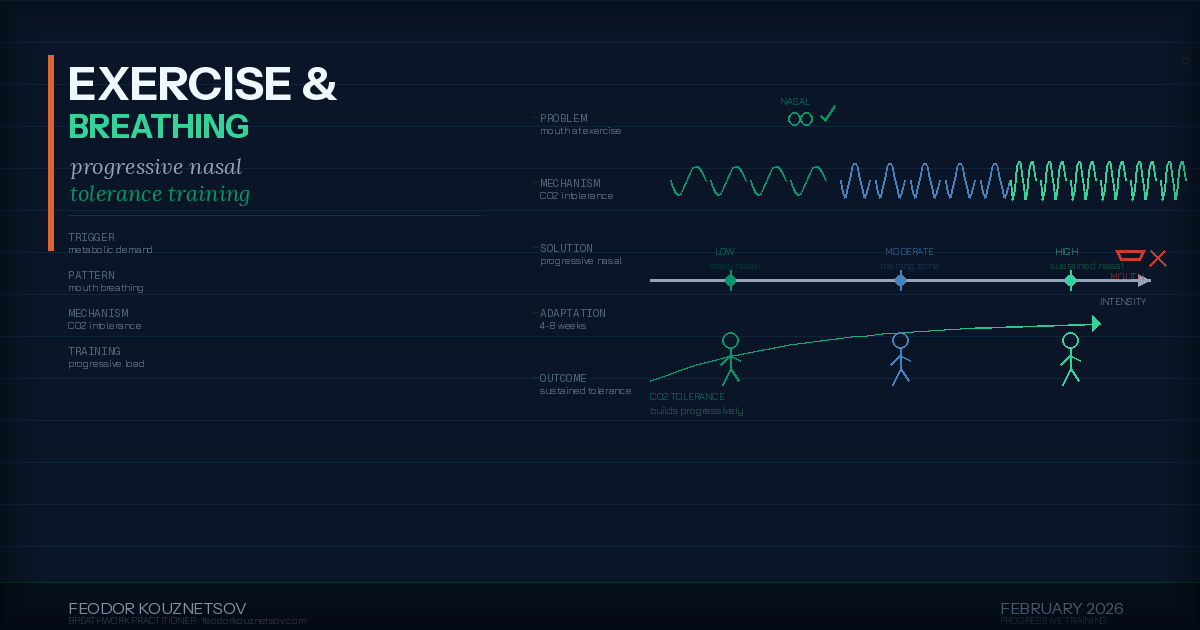
Exercise and Breathing Pattern Dysfunction — Why Nasal Breathing During Physical Activity Improves Performance and How to Retrain
Most people abandon nasal breathing during exercise, which maintains chronic hyperventilation, impairs oxygen delivery via the Bohr Effect, and prevents CO2 adaptation. Here is why nasal breathing during physical activity matters and how to retrain progressive tolerance.
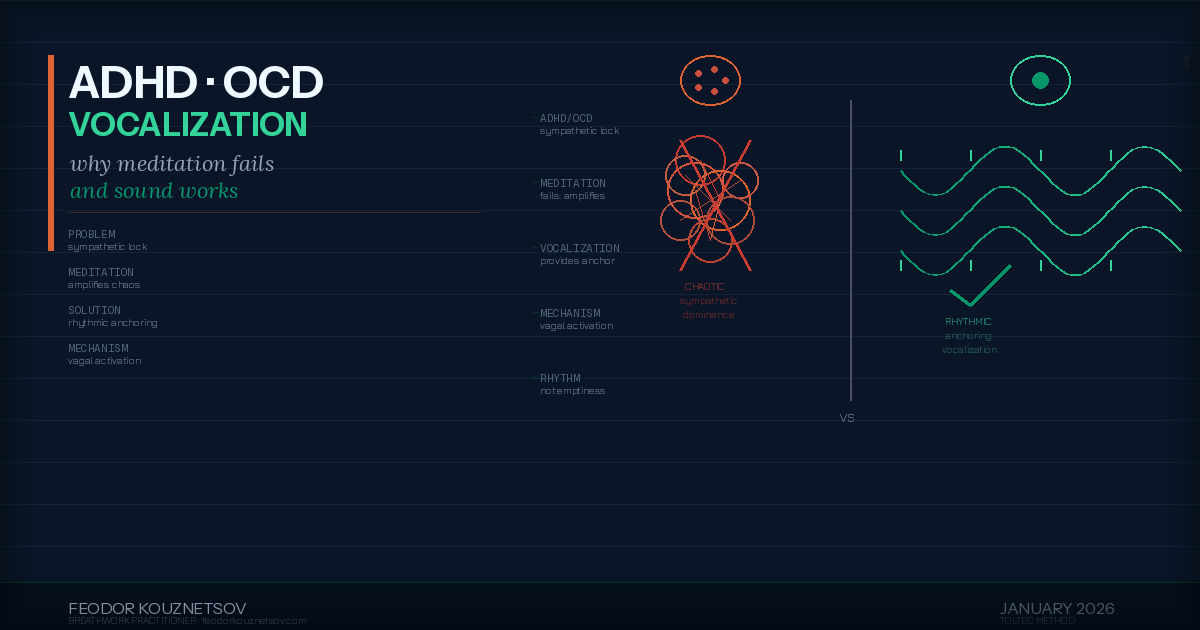
ADHD, OCD, and Breathing Dysfunction — Why Chronic Sympathetic Dominance Makes Meditation Fail and How Vocalization Provides Anchoring
ADHD and OCD involve chronic sympathetic dominance, hyperventilation patterns, and CO2 sensitivity that make traditional meditation ineffective. Breathwork with vocalization provides the anchoring and vagal activation these nervous systems require.

Nasal Breathing in Cold Weather — Why Winter Air Challenges Respiratory Function and How to Maintain Nasal Patency
Cold, dry winter air increases nasal congestion, reduces mucociliary clearance, and creates conditions where mouth breathing becomes more likely. Here is how cold weather affects nasal function and how to maintain nasal patency during winter months.
Breathing Pattern and Voice Production — How Respiratory Function Affects Vocal Quality, Endurance, and Control
Voice production depends on respiratory function. Subglottic pressure, respiratory-phonatory coordination, and breathing pattern dysfunction all directly affect vocal quality, endurance, and control. Here is how breathing patterns shape voice and how to correct common problems.

Four Breathing Techniques in Sequence — Box, Coherent, Circular, and Sleep Breathing for Progressive Nervous System Regulation
Different breathing techniques produce different nervous system effects. Sequencing them correctly — box breathing, coherent breathing, circular breathing, sleep breathing — creates a progressive shift from baseline regulation through activation and release to deep parasympathetic rest.
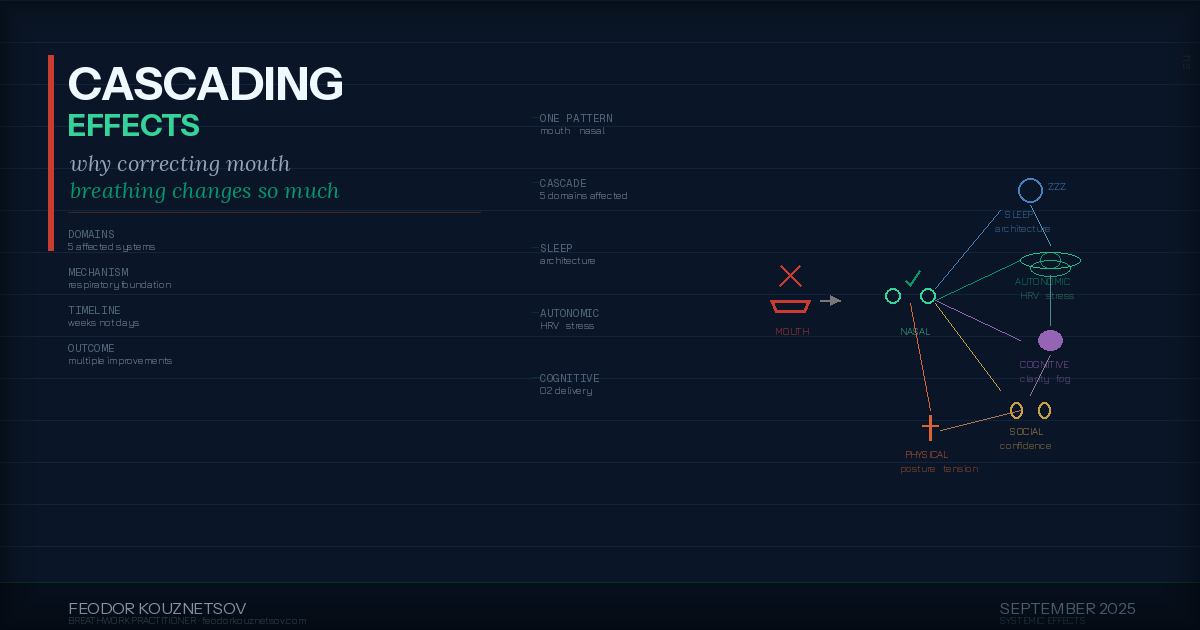
Why Correcting Mouth Breathing Affects More Than Just Breathing — Cascading Effects on Sleep, Stress, and Daily Function
Mouth breathing is not just a respiratory problem. It creates a cascade of effects across sleep architecture, autonomic regulation, cognitive function, and social interaction. Here is why correcting it produces improvements far beyond breathing itself.
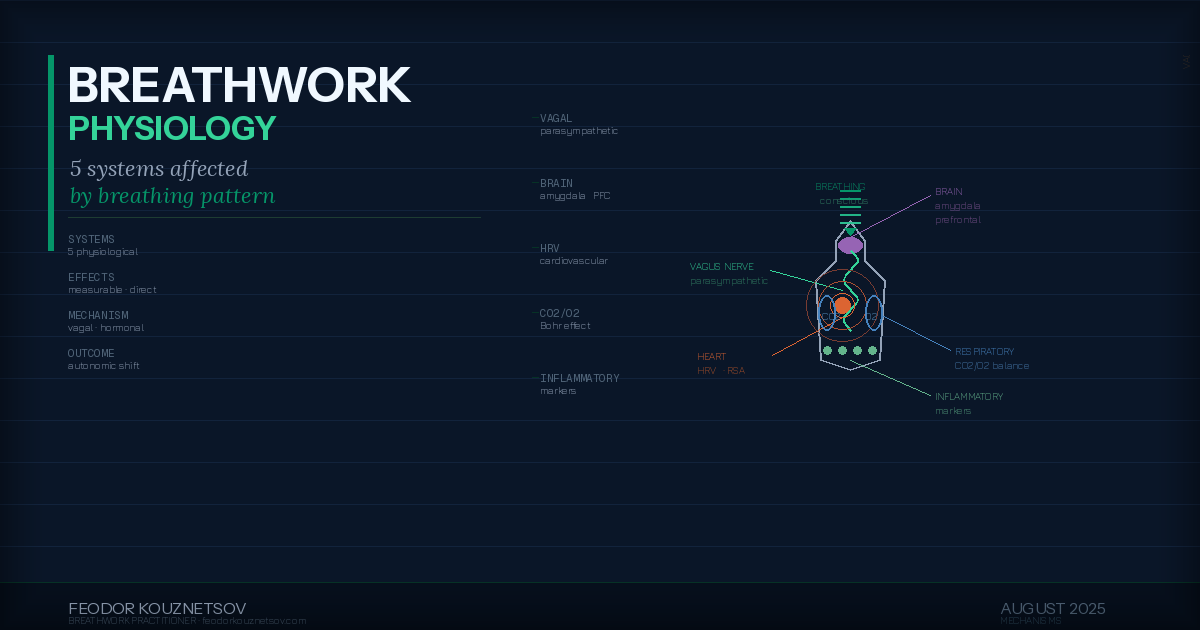
The Physiology of Breathwork — How Breathing Pattern Affects Nervous System, Brain, and Cardiovascular Function
Breathwork is not just a relaxation technique. It is a set of interventions that directly affect autonomic function, brain activity, cardiovascular regulation, and inflammatory response. Here is how conscious breathing produces measurable physiological changes.
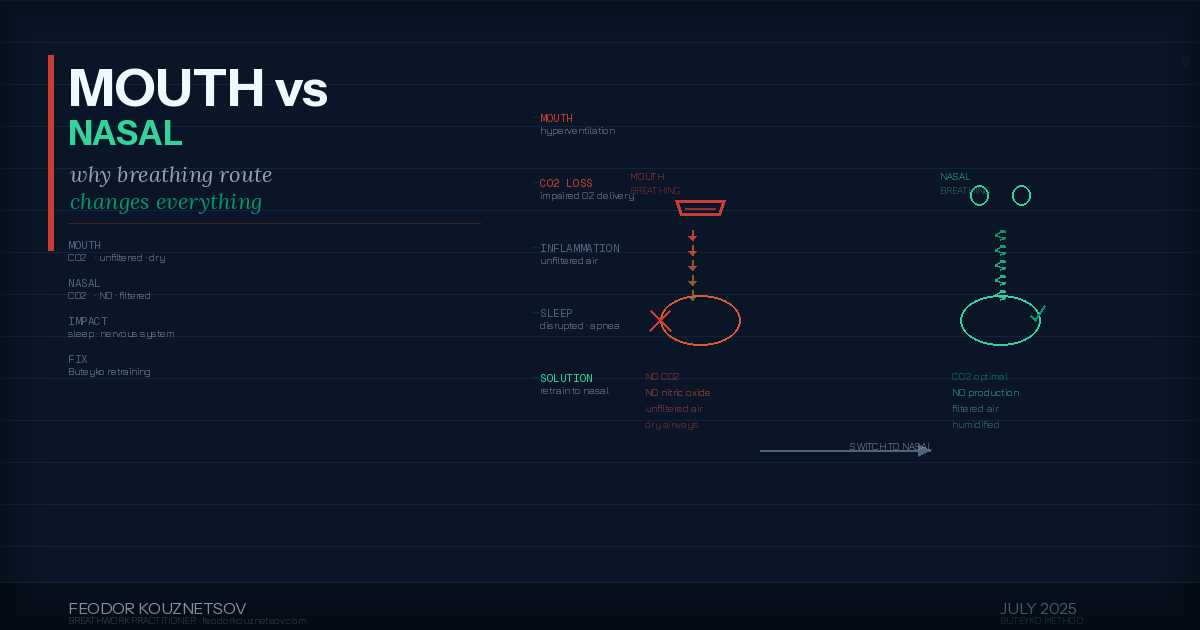
Mouth Breathing — Why It Matters and How to Correct It
Mouth breathing is not just a habit. It is a pattern that directly affects CO2 levels, sleep quality, nervous system regulation, and chronic inflammation. Here is why nasal breathing matters and how to correct chronic mouth breathing.
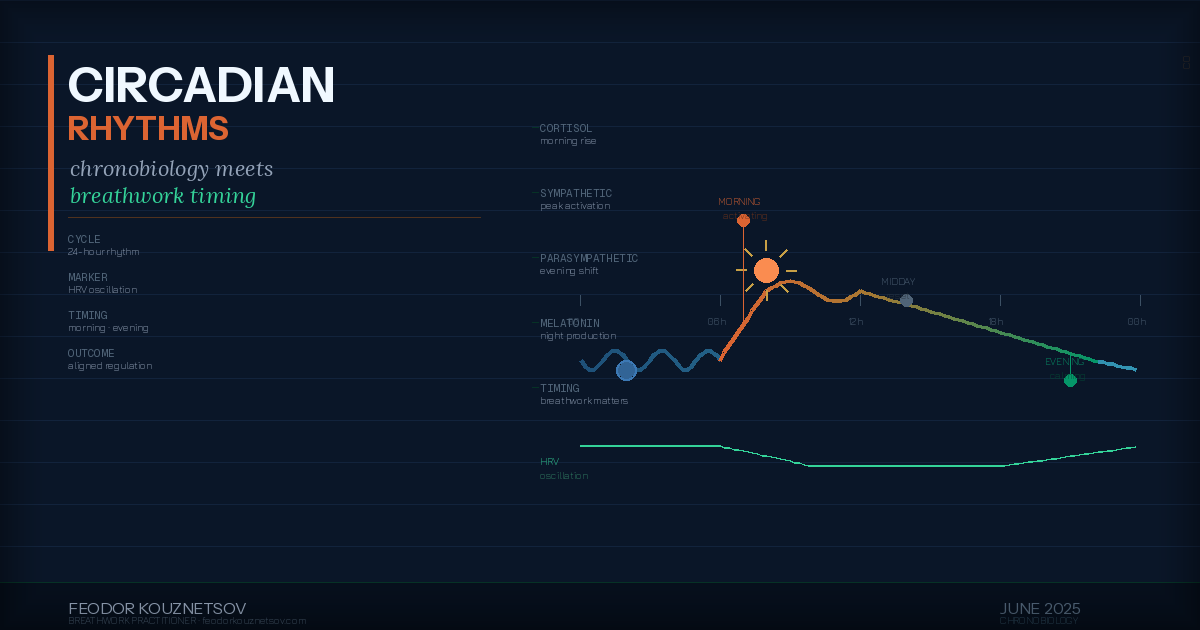
Chronobiology and Breathwork — How Circadian Rhythms Affect Nervous System Regulation
Circadian rhythm disruption is one of the most underrecognized drivers of chronic nervous system dysregulation. Here is how it affects HRV, inflammation, and autonomic function — and how breathwork timing can either amplify or mitigate the damage.
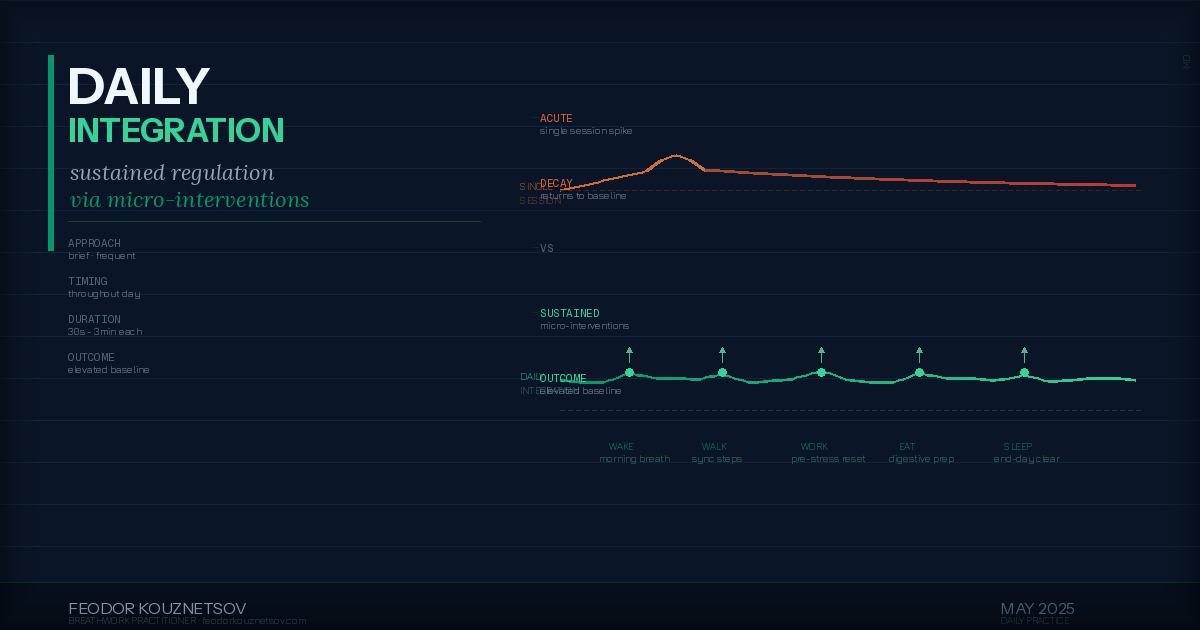
Integrating Breathwork Into Daily Life — Sustained Nervous System Regulation
Structured breathwork sessions produce acute shifts in nervous system state. But sustained regulation requires integrating breath awareness into daily activities. Here is how to do that without adding another practice to your schedule.
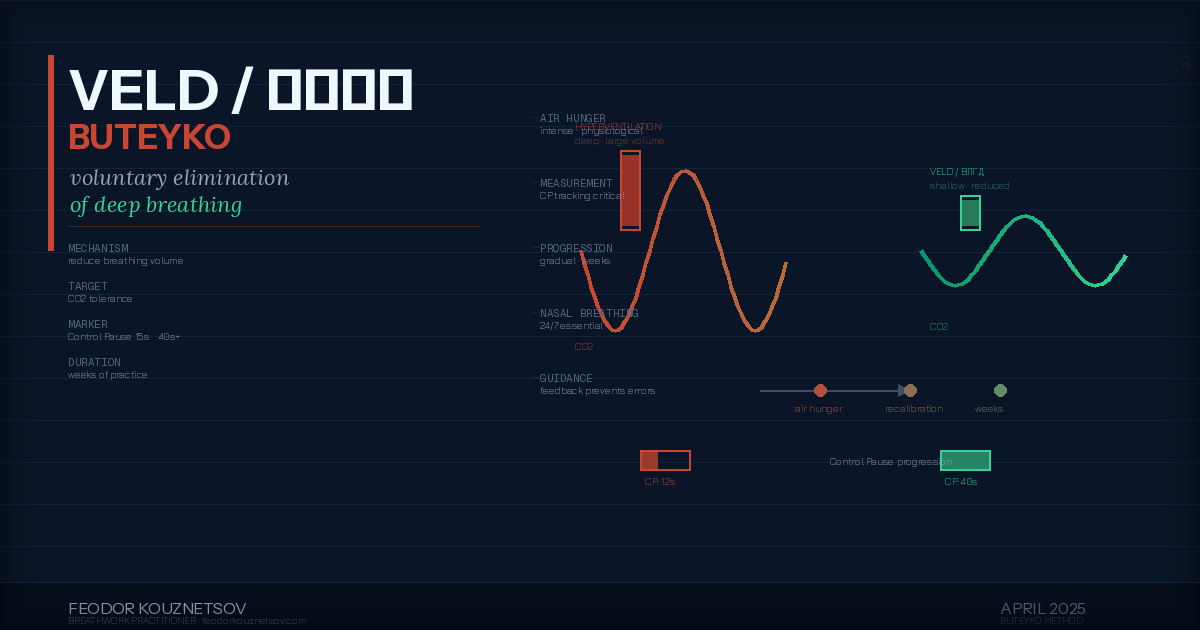
Why Voluntary Elimination of Deep Breathing Is Harder Than It Sounds
VELD — Voluntary Elimination of Deep Breathing — is Buteyko's original Russian term for the practice. The concept is simple. The execution is not. Here is why self-directed practice usually fails and what it takes to make it work.
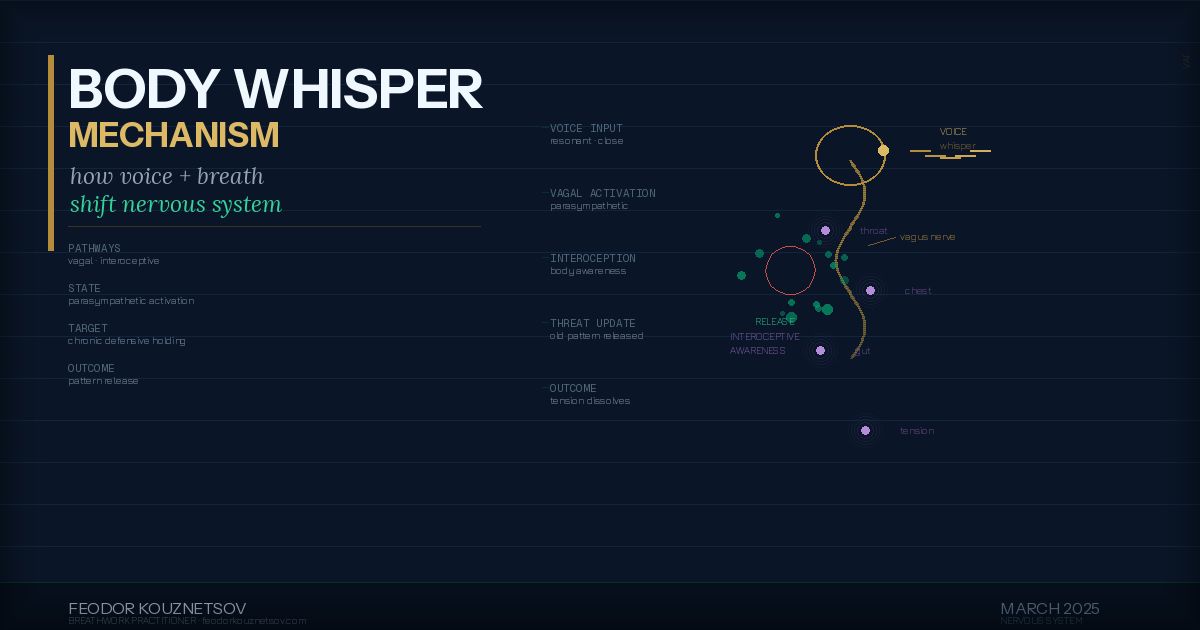
How the Body Whisper Session Works — The Nervous System Mechanism Explained
The Body Whisper Session produces measurable changes in chronic pain, anxiety, and somatic holding patterns. Here is the nervous system mechanism that explains how voice, breath, and interoceptive awareness combine to produce those effects.
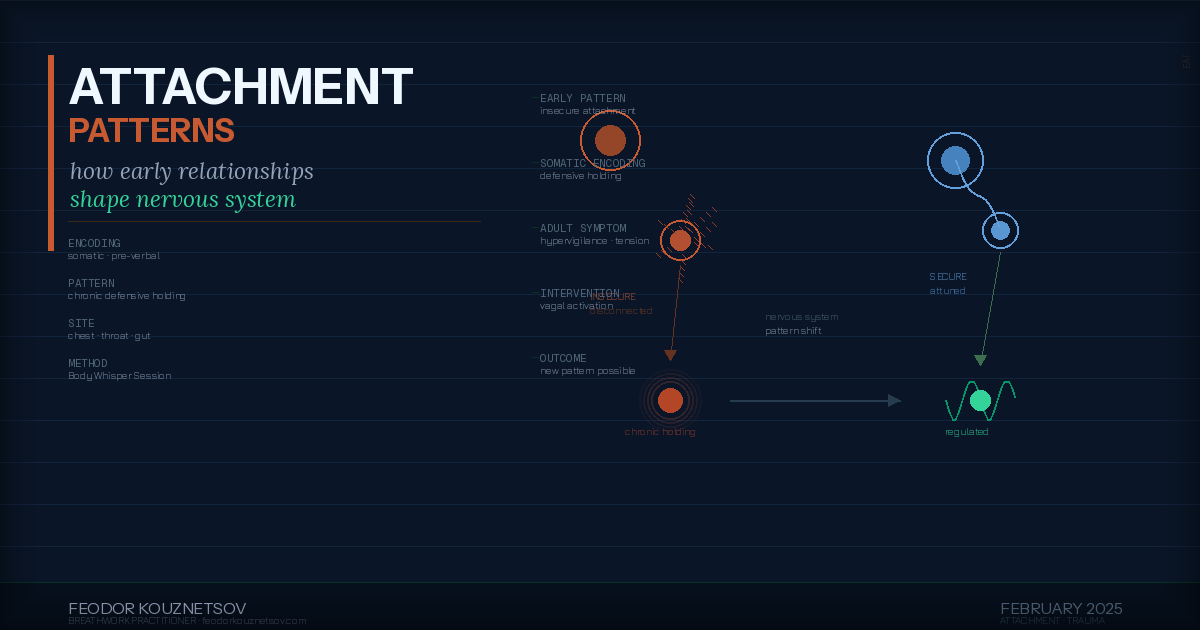
How Early Attachment Patterns Create Chronic Nervous System Holding — And How to Release Them
Early relational experiences — particularly with primary caregivers — shape how the nervous system responds to safety, threat, and intimacy throughout life. When those early patterns were insecure or dysregulated, the body holds that defensive state somatically. Here is how it manifests and how to address it.

How I Used Breathwork to Manage Ankylosing Spondylitis — The Epigenetics Story
By 2015 I was managing Ankylosing Spondylitis without constant medication. This is the personal story of how breathwork, epigenetic understanding, and sustained practice shifted a condition most people are told they will live with for life.
How Buteyko Breathing Works — The Bohr Effect Mechanism Explained
The Buteyko method works because it directly leverages the Bohr Effect — the physiological relationship between CO2 and oxygen delivery. Here is how the two connect and what it means in practice.
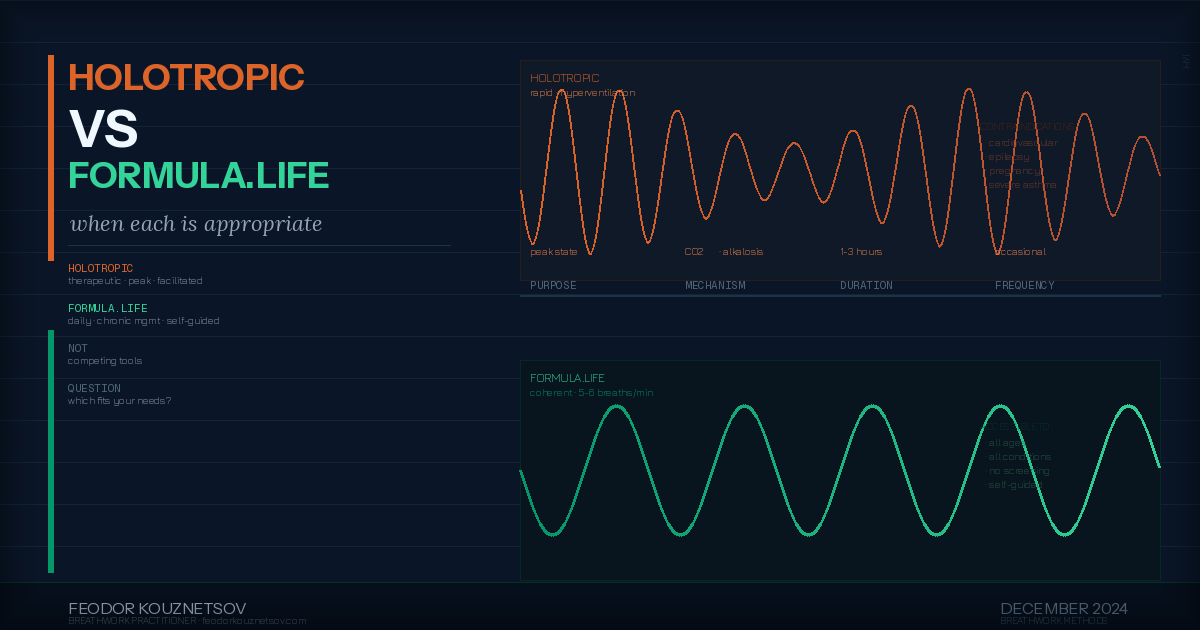
Holotropic Breathwork vs Formula.life — When Each Approach Is Appropriate
Holotropic breathwork and Formula.life serve different purposes. One is a therapeutic intervention requiring screening and facilitation. The other is designed for daily practice and chronic condition management. Here is when each is appropriate.
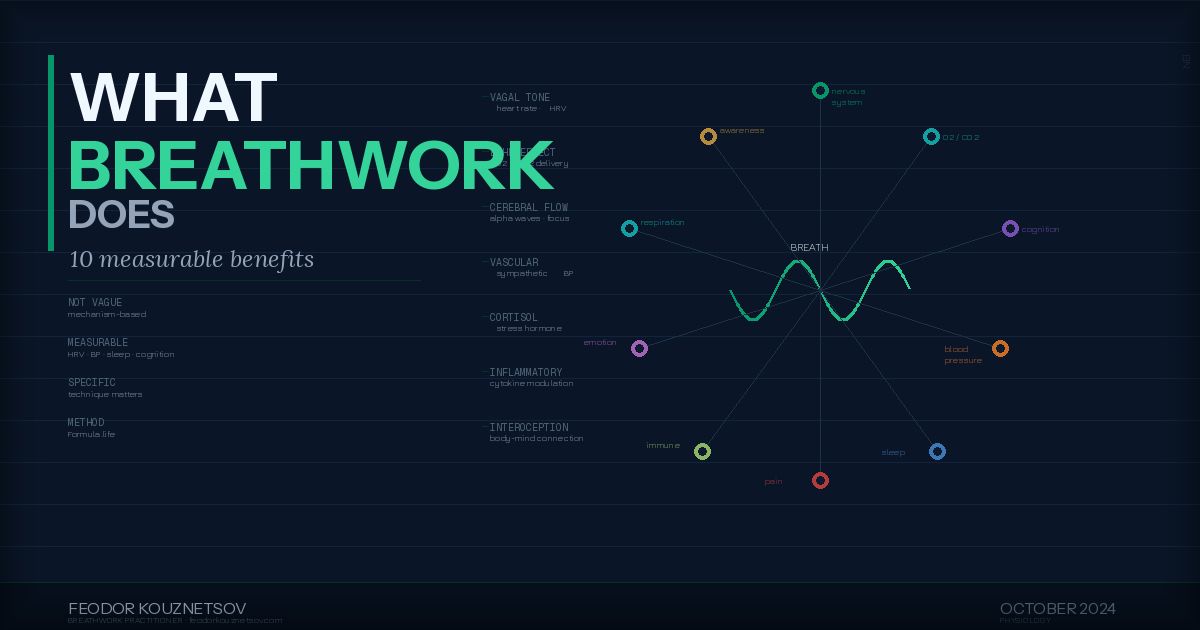
What Breathwork Actually Does — 10 Measurable Benefits Backed by Mechanism
Breathwork is not vague relaxation. It is a set of specific interventions with measurable effects on the nervous system, cardiovascular function, and cognitive performance. Here is what it actually does and how.

What Epigenetics Actually Is — And Why Your Daily Choices Are Talking to Your Genes
Epigenetics is not a wellness buzzword — it is a precise field of molecular biology explaining how your environment, stress levels, and daily habits influence which genes are active and which are not. Here is what the science actually says.

Dream Planting — Using Breathwork and Intention to Work With Your Dreams
Dream Planting is a structured pre-sleep practice combining breathwork, intention-setting, and symbolic imagery to influence dream content, increase lucidity, and access unconscious problem-solving. Here is what it is and how it works.
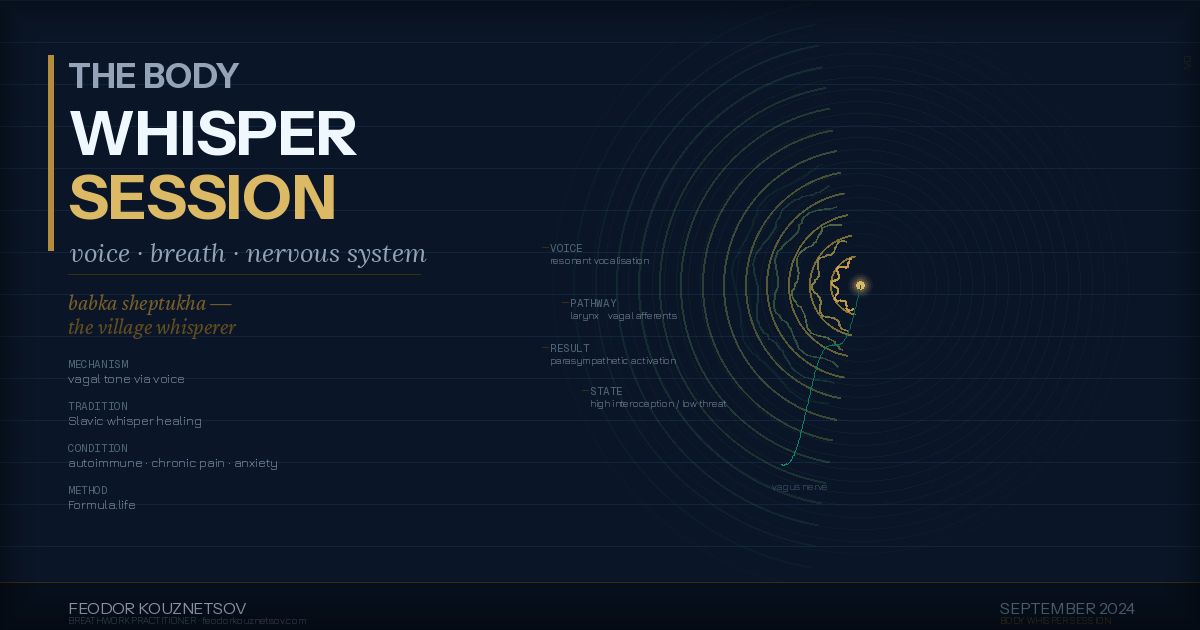
The Body Whisper Session — Where It Came From and How It Works
The Body Whisper Session combines voice, breath, and nervous system work in a way I developed over many years of personal practice managing Ankylosing Spondylitis. Here is the origin of the method and what actually happens during a session.
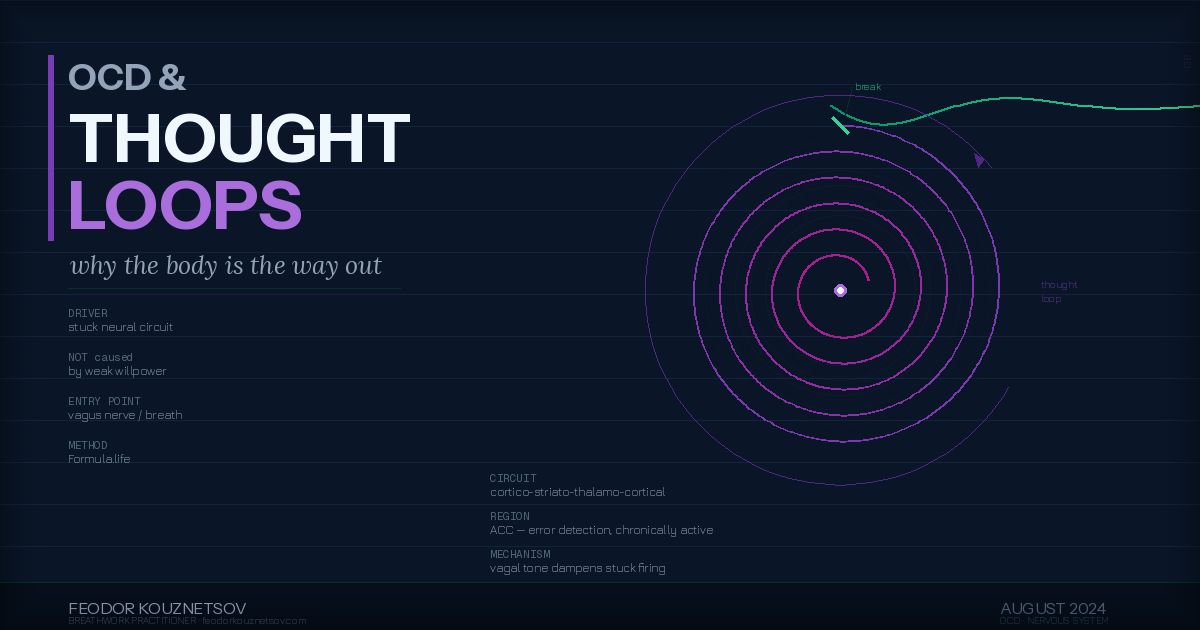
OCD and Thought Loops — Why the Body Is the Way Out
OCD thought loops are not a thinking problem — they are a nervous system problem. Understanding what is actually happening in the brain and body opens up a more direct route out than cognitive work alone.
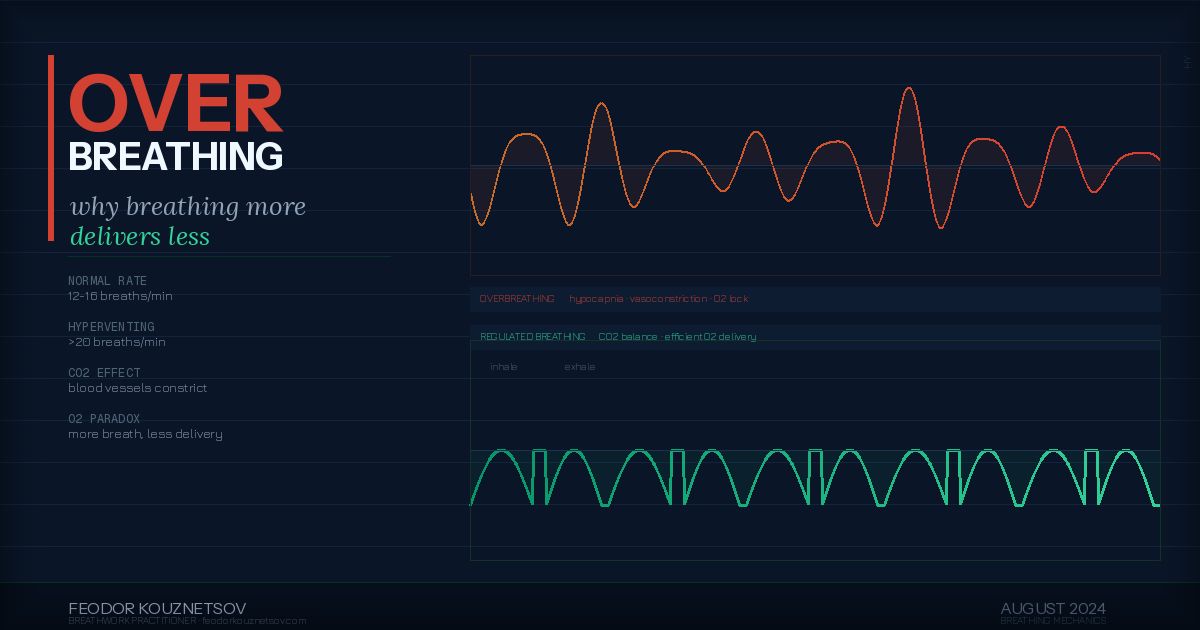
Overbreathing — What It Is, Why It Happens, and How to Stop the Cycle
Overbreathing — breathing more than your body actually needs — is far more common than most people realise, and its symptoms are routinely mistaken for anxiety, heart problems, or fatigue. Here is what is actually happening and what to do about it.
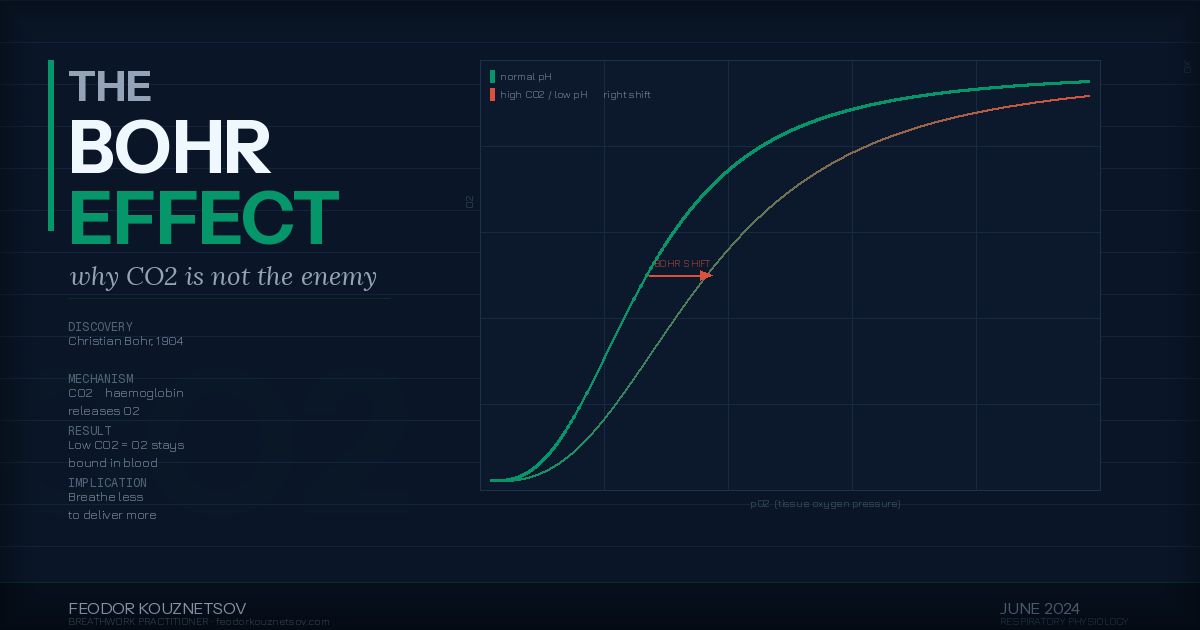
The Bohr Effect — Why Carbon Dioxide Is Not the Enemy
Most people think oxygen is everything and CO2 is just waste. The Bohr Effect — discovered in 1904 — tells a more interesting story, and it explains why how you breathe matters far more than how much you breathe.
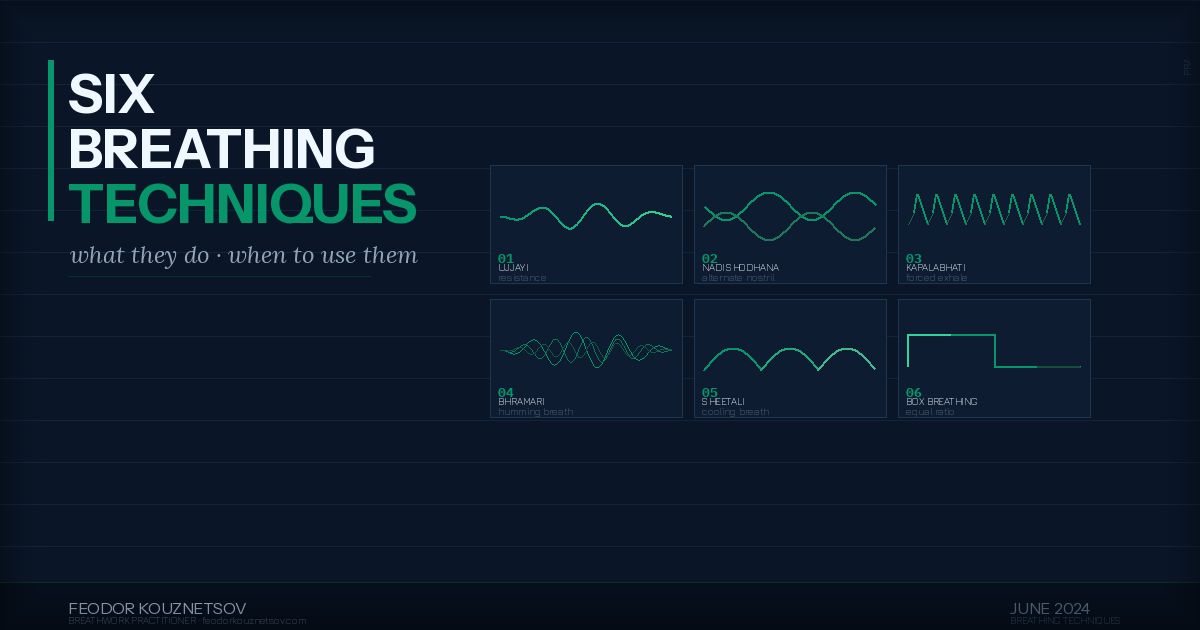
Six Breathing Techniques Worth Knowing — What They Do and When to Use Them
Pranayama is just a Sanskrit word for deliberate breath control — and several of these techniques have solid physiological explanations for why they work. Here is a practical guide to six of them, without the mysticism.

What Is Coherent Breathing? A Simple Guide to Rhythmic Nervous System Regulation
Coherent breathing is a simple rhythmic breathing pattern that regulates the nervous system and improves heart rate variability. Here’s how it works and how to try it right now.

Buteyko Breathing Benefits: What Actually Changes (and Why It Works)
Buteyko is not “deep breathing” — it’s breathing less, through the nose, to correct chronic over-breathing. Here are the real benefits, the physiology behind them, and a simple way to start.
Why Traditional Meditation Doesn’t Work for ADD — and What I Use Instead
Traditional meditation often fails people with ADD. Here I explain why that happens and what breathing method I use instead to create real focus and nervous system stability.

The Helical Heart — Why the Architecture of Your Heart Makes Breathing the Most Powerful Tool You Have
The heart is not simply a pump — its helical muscle architecture makes it uniquely sensitive to breathing rhythm. Understanding this connection is one of the most practical things you can do for your nervous system and long-term health.

hat Epigenetics Actually Tells Us — And Why Your Nervous System Is the Real Target
Bruce Lipton's work on epigenetics points to something real: your environment and stress state influence how your genes express themselves. Here's what that actually means in practice — and how voice-based nervous system work fits in.
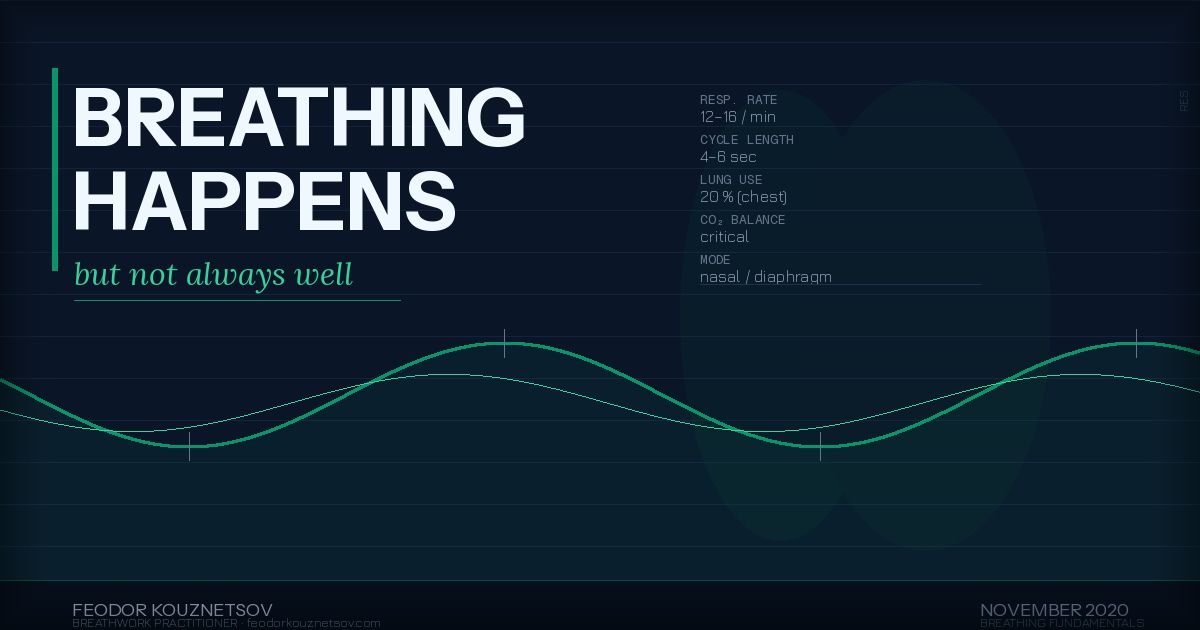
Breathing Happens — But Not Always Well
After more than 1,500 hours of breathwork practice, one thing became clear: breathing happens automatically, but not always well. Here are the fundamentals of how the breathing system works — and why your default pattern matters more than you think.
Want to understand your own situation?
Take the quick assessment — I reply personally with a recommendation.