Why Traditional Meditation Doesn’t Work for ADD — and What I Use Instead

Why Traditional Meditation Didn’t Work for My ADD
For many years I believed meditation simply “wasn’t for me”.
My mind moved too quickly. Thoughts overlapped. The moment I tried to sit still and “just observe”, my internal noise became louder, not quieter. If you have ADD, you may recognise this immediately.
What I eventually understood is this: the problem was not my mind. The problem was the method.
ADD Is Not a Character Flaw — It’s Often a Regulation Issue
Attention Deficit Disorder (ADD) is commonly described as difficulty sustaining attention, increased distractibility, and impulsivity. But from a nervous system perspective, it is often a regulation issue.
The system swings. It under-activates, then over-activates. It searches for stimulation. Stillness without structure can feel uncomfortable, even threatening.
When I tried traditional meditation — sitting quietly and observing thoughts — I wasn’t regulating my nervous system. I was simply watching dysregulation happen in real time.
For some minds, silence without structure amplifies noise instead of reducing it.
Why Traditional Meditation Often Fails for ADD
Many meditation techniques rely on passive awareness. You focus lightly on the breath and gently return when distracted.
But if distraction is constant, you spend the entire session “coming back”. That creates frustration. Frustration increases stress. Stress worsens attention.
It becomes a loop.
I needed something active. Something structured. Something that would engage the mind instead of suppressing it.
The Shift: Structured Breathwork
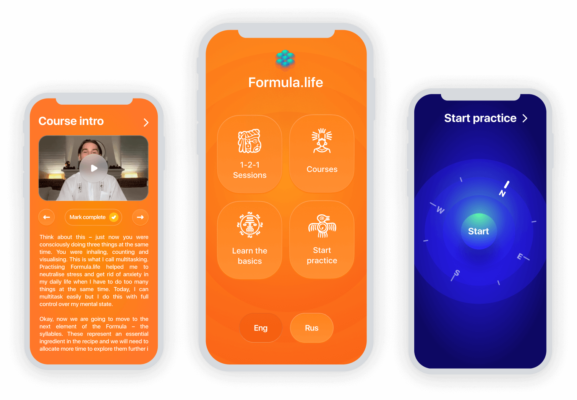
That shift came through Formula Life — a structured breathing system I developed specifically for minds that do not respond well to passive meditation.
Instead of passive observation, the method uses coordinated breathing patterns combined with counting, rhythm, and physical awareness. At times there are multiple simultaneous elements — inhale length, exhale control, counting cycles, posture awareness.
This matters.
The ADD brain responds well to structured stimulation. When the breath pattern is precise and layered, attention is not forced — it is recruited.
The mind locks in because it has something meaningful to do.
What Actually Changes in the Body
When breathing becomes structured:
- carbon dioxide levels stabilise
- over-breathing reduces
- heart rate variability improves
- the nervous system shifts toward regulation
This is not mystical. It is physiological.
As the nervous system stabilises, attention improves naturally. Not because you “tried harder”, but because the internal environment changed.
When physiology stabilises, the mind follows.
Beyond Focus: Reducing Mental Noise
When breathing becomes coherent and structured, internal dialogue softens. The ego-driven loops — overthinking, self-criticism, mental replay — begin to lose intensity.
This does not happen because you fight the ego. It happens because the body is no longer signalling threat.
What I Recommend If Meditation Has Never Worked for You
If traditional meditation has never worked for you, especially if you struggle with ADD or ADHD, I would not conclude that you “cannot meditate”. I would question whether the method fits your nervous system.
Start with structured breathing. Use rhythm. Use counting. Use measurable patterns. Build regulation first — silence comes later.
You can begin with Formula Life if you prefer a structured digital format, or explore guided sessions and courses if you want deeper work.
If you want to understand your own breathing patterns, inflammation markers, stress load, and lifestyle factors, you can take the assessment. It’s a general health questionnaire that helps identify where regulation may be breaking down.
Focus is not forced. It is built.
Next step
Want to work through your situation personally?
Disclaimer: personal experience & self-regulation practices. Not medical advice.