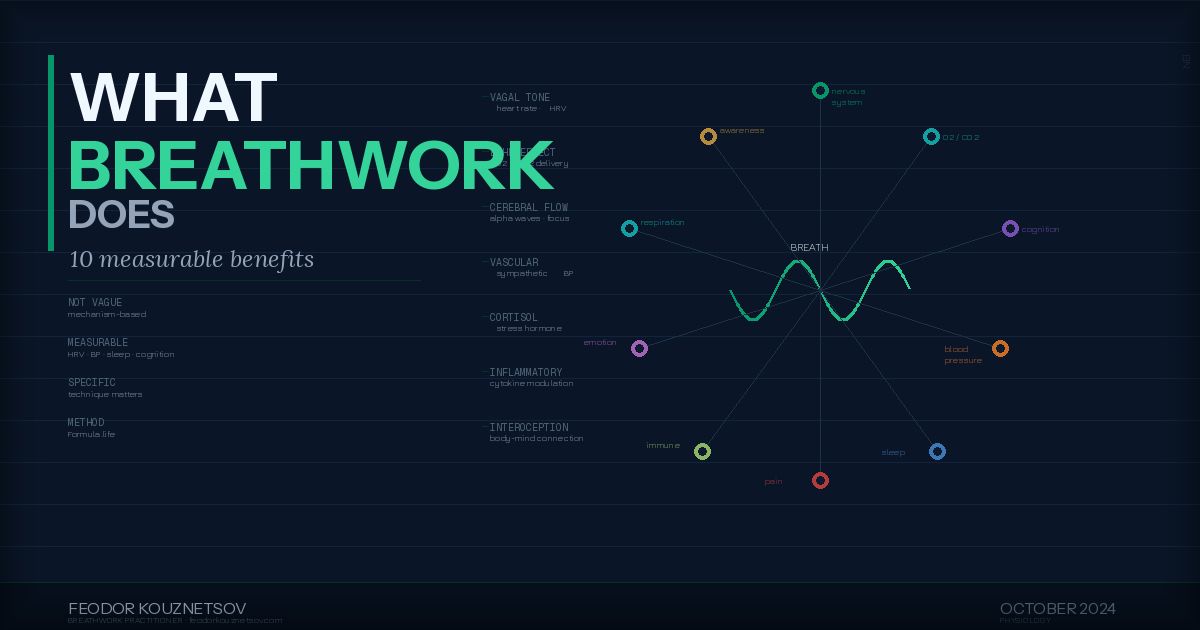
What Breathwork Actually Does — 10 Measurable Benefits Backed by Mechanism
Not All Benefits Are Equal
Breathwork is frequently presented as a catch-all wellness practice with vague claims about stress relief, energy, and mindfulness. Some of those claims are accurate. Others are overstated. What matters is distinguishing between effects that are measurable and mechanism-based from those that are subjective or placebo-driven.
This list focuses on the benefits that have clear physiological pathways and are supported by research. Each one includes the mechanism — not just the claim — because understanding how breathwork produces an effect is what makes the practice usable rather than mystical.
1. Nervous System Regulation
What it does: Shifts the autonomic nervous system from sympathetic (fight-or-flight) to parasympathetic (rest-and-digest) dominance.
Mechanism: Extended exhalation activates the vagus nerve, which signals the brainstem to reduce heart rate, lower cortisol output, and decrease overall arousal. This is the primary pathway through which breathwork reduces stress and anxiety. The effect is immediate and measurable through heart rate variability (HRV), which increases as vagal tone improves.
Relevance: This is the foundation of breathwork's utility for chronic conditions, anxiety, OCD, and inflammatory states where the nervous system is chronically activated.
2. Improved Oxygenation and CO2 Tolerance
What it does: Increases oxygen delivery to tissues and raises tolerance to CO2 accumulation.
Mechanism: Most people chronically overbreathe, which lowers blood CO2 and impairs oxygen delivery through the Bohr Effect. Breathwork that emphasises slower, nasal breathing raises CO2 tolerance, which paradoxically improves tissue oxygenation. This is covered in detail in the Bohr Effect post.
Relevance: Directly addresses symptoms like breathlessness, fatigue, brain fog, and exercise intolerance that are driven by inefficient respiration rather than actual oxygen deficit.
3. Enhanced Cognitive Function
What it does: Improves focus, memory, and decision-making capacity.
Mechanism: Improved cerebral blood flow from better CO2 regulation, combined with reduced sympathetic activation that otherwise diverts resources toward threat monitoring. Breathwork also increases alpha wave activity in the prefrontal cortex, which is associated with sustained attention and working memory.
Relevance: Useful for anyone experiencing cognitive fatigue, ADHD symptoms, or difficulty concentrating under stress.
4. Blood Pressure and Cardiovascular Health
What it does: Lowers resting blood pressure and improves heart rate variability.
Mechanism: Slow, deep breathing reduces sympathetic outflow to the blood vessels, decreasing vascular resistance. Increased HRV — a marker of cardiovascular flexibility and resilience — is one of the most consistent findings in breathwork research.
Relevance: Particularly significant for people with hypertension, cardiovascular risk factors, or chronic stress-related conditions.
5. Sleep Quality
What it does: Shortens sleep onset time and increases slow-wave sleep duration.
Mechanism: Pre-sleep breathwork reduces arousal, lowers core body temperature slightly, and shifts the nervous system into a state conducive to sleep initiation. Techniques like 4-7-8 breathing and coherent breathing have been studied specifically for insomnia.
Relevance: Essential for anyone with stress-related sleep disturbance, which is common in chronic pain, anxiety, and autoimmune conditions.
6. Pain Modulation
What it does: Reduces the subjective intensity of pain and increases pain tolerance.
Mechanism: Breathwork activates descending pain inhibition pathways from the periaqueductal gray in the midbrain. It also reduces central sensitisation — the nervous system amplification of pain signals that occurs in chronic pain states. This is not placebo; fMRI studies show measurable changes in pain-processing regions of the brain during controlled breathing.
Relevance: Directly applicable to chronic pain conditions including fibromyalgia, migraines, and inflammatory pain.
7. Immune Function and Inflammation
What it does: Modulates inflammatory cytokine production and improves immune regulation.
Mechanism: Chronic stress suppresses regulatory T-cell function and increases pro-inflammatory cytokines like IL-6 and TNF-alpha. Breathwork that reduces sympathetic activation reverses this pattern. There is also evidence that specific breathing techniques (notably the Wim Hof method) can produce temporary shifts in immune markers, though the clinical relevance of this is still being studied.
Relevance: Particularly important for autoimmune and chronic inflammatory conditions where nervous system dysregulation is part of the disease mechanism.
8. Emotional Regulation
What it does: Increases the capacity to tolerate and process difficult emotions without reactive behaviour.
Mechanism: Breathwork strengthens prefrontal cortex regulation of the amygdala — the brain's threat-detection centre. When the nervous system is not in chronic activation, the prefrontal cortex can modulate emotional responses more effectively, reducing impulsivity and reactivity.
Relevance: Core skill for anyone dealing with anxiety, PTSD, or emotional volatility.
9. Respiratory Efficiency
What it does: Improves diaphragmatic function and reduces dead space ventilation.
Mechanism: Most people breathe primarily with accessory muscles (chest and neck) rather than the diaphragm, which is less efficient and maintains a higher baseline breathing rate. Breathwork retrains diaphragmatic activation, which reduces the work of breathing and improves gas exchange efficiency.
Relevance: Essential for people with asthma, COPD, or habitual chest breathing patterns.
10. Interoceptive Awareness
What it does: Increases awareness of internal bodily states and sensations.
Mechanism: Breathwork directs attention to interoceptive signals — heart rate, temperature, muscle tension, gut sensations. This strengthens the insula, the brain region responsible for mapping internal states. Improved interoceptive awareness is associated with better emotional regulation, reduced alexithymia (difficulty identifying emotions), and greater overall self-regulation.
Relevance: Important for people who are disconnected from bodily signals or who have learned to override physical cues — common in chronic stress, trauma, and eating disorders.
What This Means in Practice
Not every breathwork technique produces all of these benefits. The effect depends on the specific pattern — slow breathing for vagal activation, breath holds for CO2 tolerance, forceful breathing for sympathetic arousal (useful in specific contexts but not for chronic stress). Understanding which technique does what is the difference between using breathwork strategically and hoping for generic wellness outcomes.
Formula.life is built around this principle: matching the technique to the outcome you need, based on your current nervous system state and the condition you are managing. If you want to understand where you are starting from, the assessment gives me the context to tailor recommendations. If you want to work on this directly, individual sessions are where we apply the right techniques to your specific situation.
And if you want structured guidance in a course format, the courses page has options for both general breathwork and specific applications like Dream Planting.
Next step
Want to work through your situation personally?
Disclaimer: personal experience & self-regulation practices. Not medical advice.